Sewer Line Repair: Methods, Costs, and What to Expect
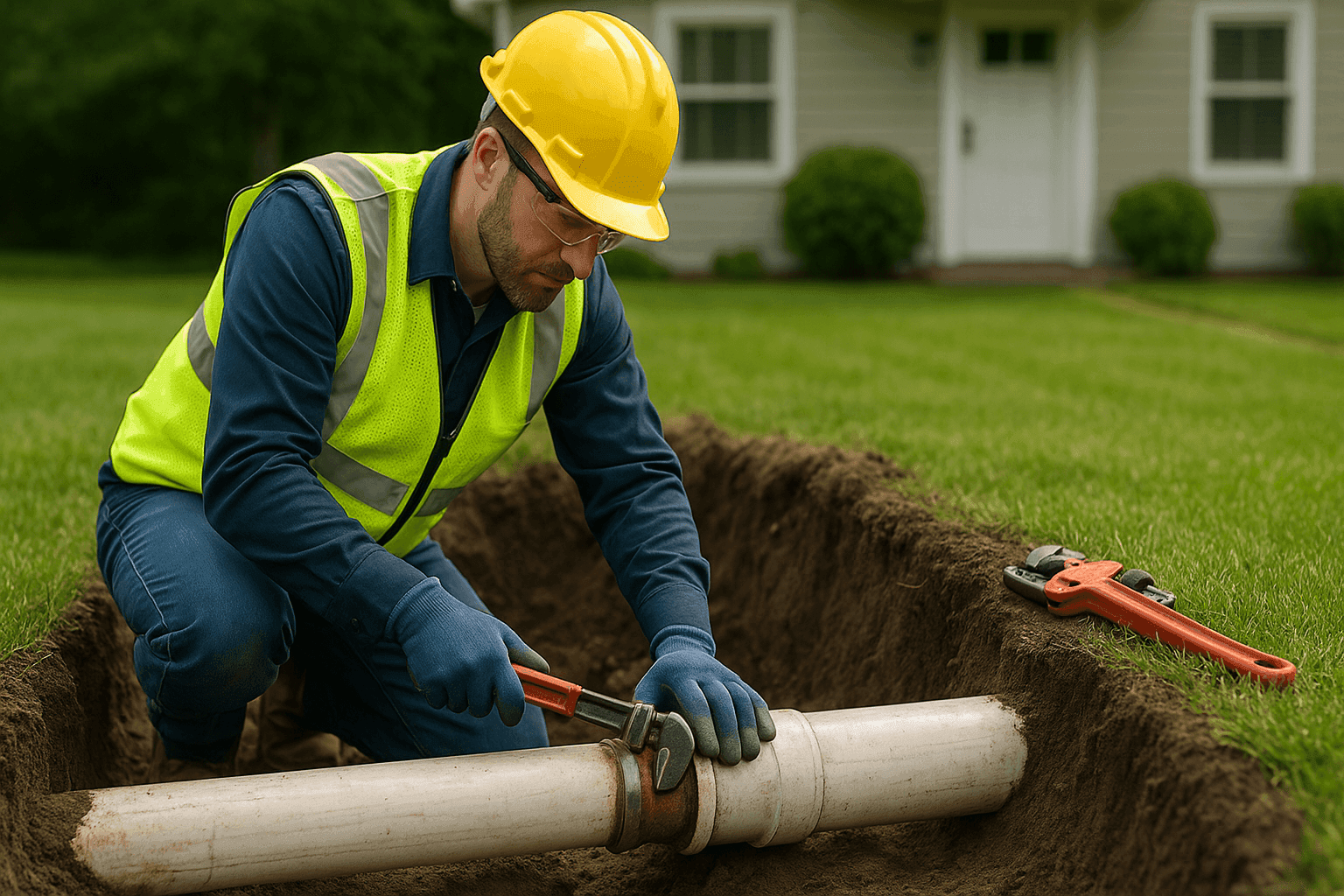
When your sewer backs up, it can throw your whole world off balance. A foul odor seeps up from the drains; water burbles where it shouldn’t. If you’re standing in your yard, watching a technician dig, you’re not alone. Sewer line repair is a rite of passage for many homeowners—and it rarely happens at a convenient time.
At Hynes Plumbing, we’ve seen just about every scenario. Our team responds fast, day or night, with clear answers and steady hands. If you’re facing a sewer line emergency, or just want to know what to expect, you’re in the right place.
Common Sewer Line Problems 🚧
Sewer lines might seem invisible—until something goes wrong. Here are the most frequent issues we see in residential plumbing:
- Tree root intrusion: Roots slip into tiny cracks, then expand. Over time, they take over the pipe.
- Pipe collapse or sagging: Older pipes made from clay, cast iron, or Orangeburg can buckle or cave in.
- Grease and debris buildup: Years of kitchen use can coat the inside of pipes, narrowing the path for waste.
- Corrosion: Metal pipes, especially in older homes, rust from the inside out.
- Joint leaks and misalignments: Ground shifts or poor installation mean pipes don’t stay lined up.
- Breaks due to ground movement or heavy traffic: Construction, earthquakes, or even a heavy truck parked over the wrong spot can snap a pipe in two.
If your drains are slow, toilets gurgle, or you spot lush green patches in your yard, these could be warning signs.
Repair Methods Explained (Traditional vs. Trenchless) 🛠️
Not every sewer line repair looks the same. The right fix depends on what’s broken, where, and the condition of the pipes. Let’s break it down:
Traditional (Open-Trench) Repair
Think of this as open-heart surgery for your yard. The crew digs a trench, exposes the pipe, and replaces the damaged section.
Pros:
- Works for every type of break, collapse, or severe misalignment.
- Lets plumbers see and address every issue directly.
Cons:
- Major yard and landscaping disruption.
- Takes longer, especially if obstacles (like driveways or patios) are in the way.
Visual Diagram:
[House] ———— [Excavated Trench] ———— [Sewer Main]
Trenchless Sewer Repair
Trenchless methods are like keyhole surgery—less mess, less fuss. Two main types:
- Pipe bursting: A new pipe is pulled through the old one, breaking the old pipe apart as it goes.
- Pipe lining (CIPP): A resin-soaked liner is inserted and cured inside the old pipe, forming a new inner wall.
Pros:
- Minimal digging—usually just two small holes.
- Faster, with most jobs done in a day.
- Preserves landscaping and hardscapes.
Cons:
- Not suitable for pipes with complete collapses or major bellies.
- Slightly higher upfront cost, but often offset by reduced yard repair expenses.
Visual Diagram:
[Entry Pit] ———— [Old Pipe] ———— [Exit Pit]
    |                |           |
 [Liner/Pipe Pulled Through Existing Line]
Code & Permitting Notes:
Permits are usually required for sewer line work. Local codes (such as Uniform Plumbing Code or International Plumbing Code) dictate pipe materials, slope, and inspection standards. Always ask your plumber if permitting is included—at Hynes Plumbing, we handle all required paperwork.
Average Costs by Region 💸
Sewer line repair costs can swing wildly, depending on where you live, the repair method, pipe depth, and local soil conditions. Here’s what homeowners typically face:
-
Traditional Repair:
- National average: $4,000–$15,000
- Urban areas (dense, deep pipes): Higher range
- Rural/suburban (shallow, accessible pipes): Lower range
-
Trenchless Repair:
- National average: $6,000–$20,000
- Pipe lining: $80–$250 per linear foot
- Pipe bursting: Similar range, with less post-work yard repair
-
Additional Costs:
- Permit fees: $100–$1,000, depending on municipality
- Landscape repair: $500–$5,000 if extensive
These are ballpark figures. Your home’s layout, pipe material, and even the time of year (frozen ground costs more to dig) can affect the final bill. Always request a detailed, written estimate.
Repair Timelines ⏳
How long does sewer line repair take? The answer depends on method and complexity.
- Diagnosis (Cameras, Locating): 1–2 hours
- Permitting: 1–3 days (some cities offer same-day)
- Traditional Repair: 2–5 days, including excavation and restoration
- Trenchless Repair: 1–2 days (sometimes less)
- Inspection & Backfill: 2–3 hours
- Final Clean-Up & Testing: 1 day
Tip: Rain, frozen ground, or local permit backlogs can add to the timeline. Ask your plumber for a realistic schedule based on current weather and city processes.
Choosing the Right Plumber 🧰
Your sewer repair is only as good as the team behind it. Here’s what to look for:
-
Licensing & Insurance: Always ask to see proof. Sewer work requires specific local credentials.
-
Experience with Both Methods: Not every plumber is trenchless-certified. Make sure they offer the right option for your scenario.
-
Clear Estimates: Look for itemized, written breakdowns. Surprises are for birthdays, not plumbing bills.
-
Local Code Knowledge: Every city has quirks—like special bedding for pipes, or strict backflow rules.
-
References: Ask for recent customer reviews or testimonials. At Hynes Plumbing, we’re proud to share our track record:
“Hynes Plumbing handled our sewer line emergency at 2am—calm, professional, and no hidden costs. They explained everything, and by the next day, our home was back to normal.” — Sandra P., Homeowner
-
Straightforward Communication: No jargon, just plain language and real timelines.
Local Permitting & Code Requirements
Every sewer line job—even emergency plumbing—needs to follow local codes. Here’s what that means for you:
- Permits: Most cities require permits for repair or replacement. Some areas need pre- and post-inspections.
- Pipe Materials: Codes may specify what types of pipe (e.g., PVC, cast iron, HDPE) are allowed.
- Backflow Prevention: Many jurisdictions require backflow devices to protect drinking water.
- Depth & Slope: Pipes must be buried deep enough to avoid freezing and set at the right angle for proper flow.
You can check requirements with your local building department or ask your plumber to confirm. The International Association of Plumbing and Mechanical Officials (IAPMO) and local city ordinances are key sources.
What to Expect: The Hynes Plumbing Process
- Initial Call: We ask a few quick questions to understand the severity of your issue.
- On-Site Diagnosis: Using cameras and locators, we pinpoint the problem—no guesswork.
- Transparent Estimate: You get a written, itemized quote. No pressure, just the facts.
- Permitting: We handle paperwork with your city or county.
- Repair: Traditional or trenchless—whichever fits your needs, budget, and property.
- Final Inspection: We walk you through the finished work, answer your questions, and ensure everything is code-compliant.
- Follow-Up: We’re here if you have questions or notice anything after the job.
Real-World Tips for Homeowners
- Don’t ignore warning signs: Gurgling toilets, slow drains, or wet spots in the yard can get worse fast.
- Avoid chemical drain cleaners: They can eat away at pipes and add to the damage.
- Know your pipe material: Older homes may have clay or Orangeburg pipes, which fail more often.
- Schedule regular camera inspections: Especially if you’ve had tree root issues.
- Check your insurance: Some policies cover sewer line repairs—worth a call to your agent.
Frequently Asked Questions
How do I know if my sewer line needs repair or replacement?
If backups are frequent, pipes are very old, or have collapsed, replacement is usually best. Spot repairs work for isolated cracks or blockages. A camera inspection is the best way to know for sure.
Is trenchless repair always possible?
Not always. If the pipe has completely collapsed or is severely misaligned, trenchless methods may not work. Your plumber will explain the options after a camera inspection.
Will my yard be destroyed?
Trenchless repairs minimize damage, but some digging is usually required. Traditional repairs are more disruptive. We take care to restore your property as much as possible.
Do I need to move out during repairs?
Rarely. Most sewer repairs can be done with minimal disruption to your daily routine. We’ll let you know if water service will be interrupted, and for how long.
Local and Seasonal Considerations 🌦️
- Winter: Frozen ground slows excavation. Plan ahead if possible.
- Spring: High water tables can complicate digging.
- Tree roots: More active in older neighborhoods with mature trees.
- Permits: Some cities issue faster in off-peak times (avoid spring/summer rush if possible).
References
- International Association of Plumbing and Mechanical Officials (IAPMO)
- Uniform Plumbing Code (UPC)
- International Plumbing Code (IPC)
- Local municipal building departments
If you’re facing sewer line trouble, don’t wait—a small leak can become a big headache overnight. For prompt, professional help with emergency plumbing, water heater repair near you, or any residential plumbing need, Call Hynes Plumbing now — or reach us anytime at 888-426-1013 .