How to Winterize Your Plumbing: Essential Tips to Prevent Freezing and Bursts
When the first frost hits, plumbing problems can sneak up like an unwelcome draft under the door. Pipes freeze, burst, and suddenly you’re ankle-deep in icy water, scrambling for emergency plumbing help. Winter doesn’t wait, and neither should you.
At Hynes Plumbing, we know how quickly a peaceful winter morning can turn into a plumbing emergency. With years of hands-on experience, we’re here to help you get ahead of the freeze, protect your property, and keep your plumbing safe all season long.
Why Winterizing Plumbing Matters ❄️
Frozen pipes aren’t just a hassle—they’re a ticking time bomb. When water freezes, it expands. Pipes, especially those in unheated spaces, can crack under pressure. According to the International Code Council (ICC), water pipe bursts are one of the leading causes of winter property damage, often costing thousands in repairs and lost time.
Winterizing isn’t just about comfort. It’s about safeguarding your investment, avoiding costly disruptions, and ensuring your home or business stays dry and warm.
Identifying Vulnerable Plumbing Areas
Start by knowing where trouble likes to hide. Every property has weak spots—think of them as the “cold corners” of your plumbing system.
- Unheated basements and crawl spaces: Pipes running along exterior walls are especially at risk.
- Attics and garages: Out-of-sight, out-of-mind, but not out of danger.
- Outdoor faucets and hose bibs: These freeze first when temperatures drop.
- Sump pumps and drainage lines: If these freeze, you could face flooding when the thaw comes.
- Older or exposed piping: Metal pipes, especially copper and steel, are more vulnerable than modern PEX.
Walk your property. Look for pipes that feel cold to the touch, are near windows, or run through uninsulated spaces. These are your front lines.
Step-by-Step Winterization Process
Winterizing your plumbing doesn’t have to be overwhelming. Think of it as wrapping your home in a warm scarf before heading out into the cold.
1. Insulate Exposed Pipes
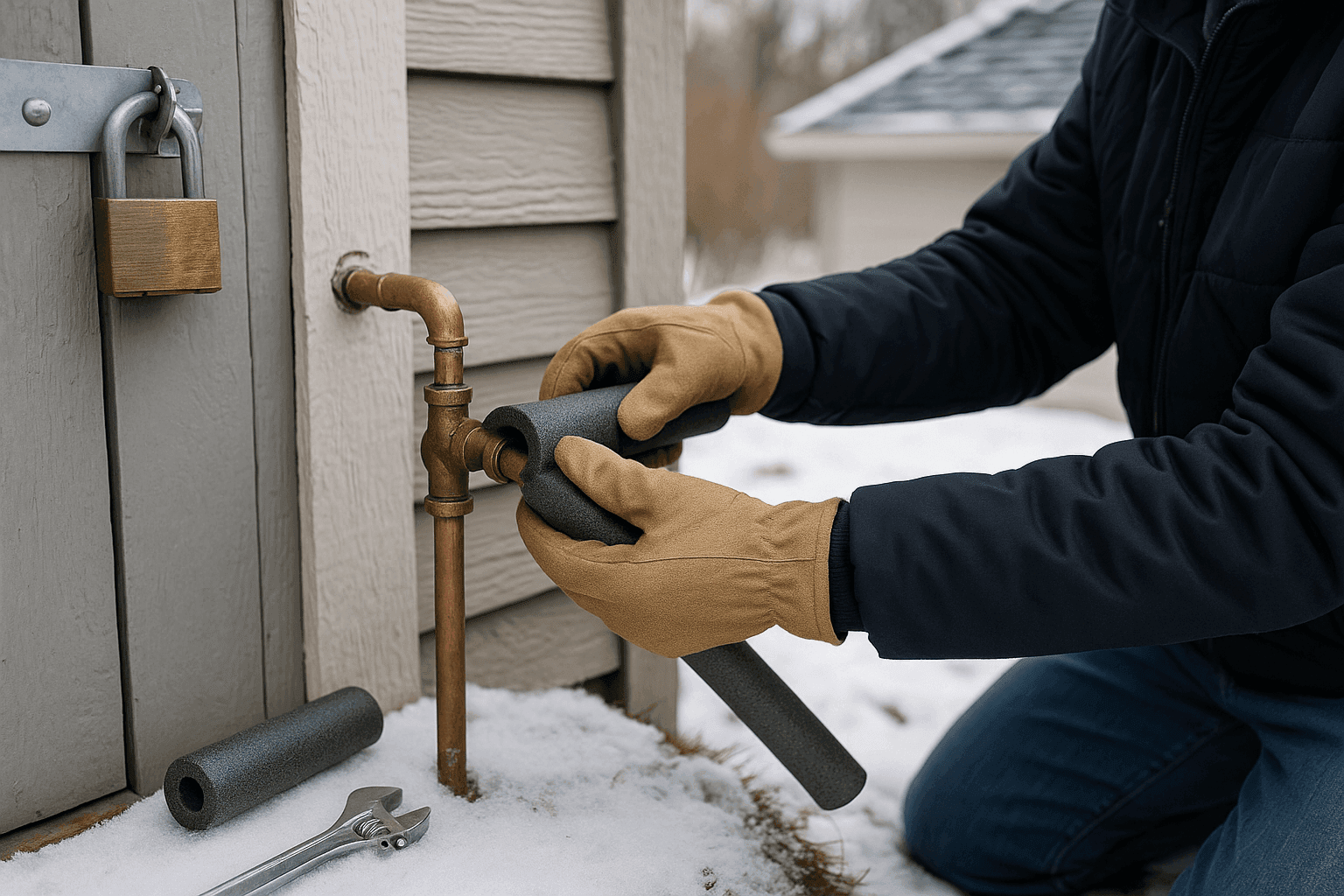
- Use foam pipe insulation sleeves or wrap pipes with heat tape (UL-listed for safety).
- Focus on basements, attics, garages, and crawl spaces.
- Don’t forget pipes under sinks or along exterior walls.
2. Drain and Protect Outdoor Faucets
- Disconnect garden hoses. Drain any remaining water.
- Shut off and drain outdoor spigots using the inside shut-off valve if available.
- Install insulated faucet covers.
3. Check Your Sump Pump
- Test your sump pump by pouring water into the pit. Make sure it turns on and drains properly.
- Clean out debris and check the discharge line for clogs.
- If your pump is exposed to cold, insulate the discharge line to prevent freezing.
4. Schedule a Gas Safety Check
- Before firing up boilers or gas water heaters, schedule a professional gas safety inspection.
- The National Fire Protection Association (NFPA) recommends annual checks to prevent leaks and ensure safe operation.
5. Seal Drafts and Leaks
- Use caulk or expanding foam to seal gaps around pipes entering walls or floors.
- Keep cabinet doors under sinks open during extreme cold to let warm air circulate.
6. Set Thermostats Wisely
- Keep your thermostat set to at least 55°F, even if you’re away.
- For small businesses, maintain a consistent temperature in utility rooms.
Quick Winter Plumbing Safety Checklist
- [ ] Insulate exposed pipes in all unheated areas
- [ ] Drain and cover outdoor faucets
- [ ] Test sump pump and insulate discharge line
- [ ] Schedule a gas safety check for water heaters and boilers
- [ ] Seal air leaks around pipes
- [ ] Keep thermostat above 55°F
- [ ] Know where your main water shut-off valve is located
A little preparation now can save you a mountain of headaches later.
DIY or Call a Pro? Knowing Your Limits
Some winterizing steps are simple—like putting on a warm coat. Others, like checking gas lines or repiping, are best left to the professionals.
DIY-friendly:
- Installing foam pipe insulation
- Draining hoses and outdoor faucets
- Sealing small drafts
Call a pro for:
- Gas line inspections and repairs
- Boiler and water heater maintenance
- Major leak detection or pipe repairs
- Backflow testing and prevention
If you’re unsure or spot signs of trouble (like rust, leaks, or strange noises), don’t risk it. Emergency plumbing issues can escalate fast in winter.
What Professional Plumbers Do On Arrival
When you call Hynes Plumbing for winterization or an emergency, here’s what to expect:
- Thorough inspection: We identify vulnerable pipes, check for leaks, and assess insulation.
- Code-compliant solutions: All work follows local building codes and standards from organizations like the ICC and NFPA.
- Advanced leak detection: Using specialized tools, we find hidden leaks before they become disasters.
- Preventative maintenance: We test sump pumps, inspect water heaters, and ensure gas lines are safe.
- Clear communication: We explain what we’re doing, why it matters, and how you can help keep your system safe.
Our goal? Keep your plumbing running smoothly—no surprises, no floods.
Prevention & Ongoing Maintenance
Winterizing isn’t a one-and-done job. Like shoveling snow, it pays to stay ahead of the next storm.
- Schedule annual plumbing inspections: Early fall is ideal, but it’s never too late.
- Flush your water heater: Sediment buildup can cause inefficiency and even damage in cold weather.
- Test sump pumps and backflow devices: Prevent flooding and contamination.
- Install water leak detectors: These small devices can alert you to leaks before they become major problems.
- Consider water filtration systems: Cold weather can stir up sediment in pipes, affecting water quality.
Following guidelines from organizations like the American Society of Plumbing Engineers (ASPE) helps ensure your system meets safety and performance standards.
Costs & Time Factors
Winterizing plumbing is an investment in peace of mind. The cost depends on the size of your property and the services needed.
- DIY insulation and faucet covers: Usually takes a few hours and costs less than a night out.
- Professional inspections and maintenance: Can range from a quick check-up to more extensive repairs.
- Emergency plumbing repairs: These are almost always more expensive and disruptive than preventative care.
Remember, a burst pipe can spill hundreds of gallons per hour—sometimes in minutes. The time spent now is nothing compared to the cleanup later.
Emergency Preparedness for Winter Plumbing Issues 🚨
Even with the best planning, winter can throw a curveball. Be ready:
- Know your main water shut-off valve location. Label it clearly.
- Keep Hynes Plumbing’s number handy for fast emergency plumbing response.
- Have basic supplies: buckets, towels, a flashlight, and a wrench.
- If a pipe bursts: Shut off water, turn off electricity to the affected area, and call for help immediately.
Quick action can make the difference between a minor inconvenience and a major disaster.
Frequently Asked Questions
What temperature do pipes freeze at?
Pipes typically start freezing at 32°F (0°C), but wind chill and poor insulation can cause problems at higher temperatures.
Can I use a space heater to warm pipes?
Space heaters can help in a pinch, but use extreme caution. Never leave them unattended or near flammable materials.
How do I know if my pipes are frozen?
Look for reduced water flow, frost on pipes, or strange noises when you turn on the tap. If you suspect a freeze, act quickly.
Is winterizing necessary every year?
Yes. Weather changes, and so does your property. Annual checks ensure nothing is missed.
Special Considerations for Homes and Small Businesses
- Vacant properties: Drain the entire plumbing system if you’ll be away for weeks.
- Commercial kitchens: Pay special attention to grease traps and dishwashing lines.
- Older buildings: Upgrade insulation and consider repiping if you have frequent issues.
- Gas appliances: Always schedule annual gas safety checks before heavy winter use.
Every property is unique. What works for one may not work for another—so tailor your winterization plan to your needs.
Winter can be harsh, but your plumbing doesn’t have to suffer. Take these steps now to keep your pipes flowing and your property protected. If you need a hand—or face an emergency—Hynes Plumbing is here for you, day or night.
Call Hynes Plumbing now — or reach us anytime at 888-426-1013 .