Garbage Disposal Repair: DIY Fixes and When to Call a Pro
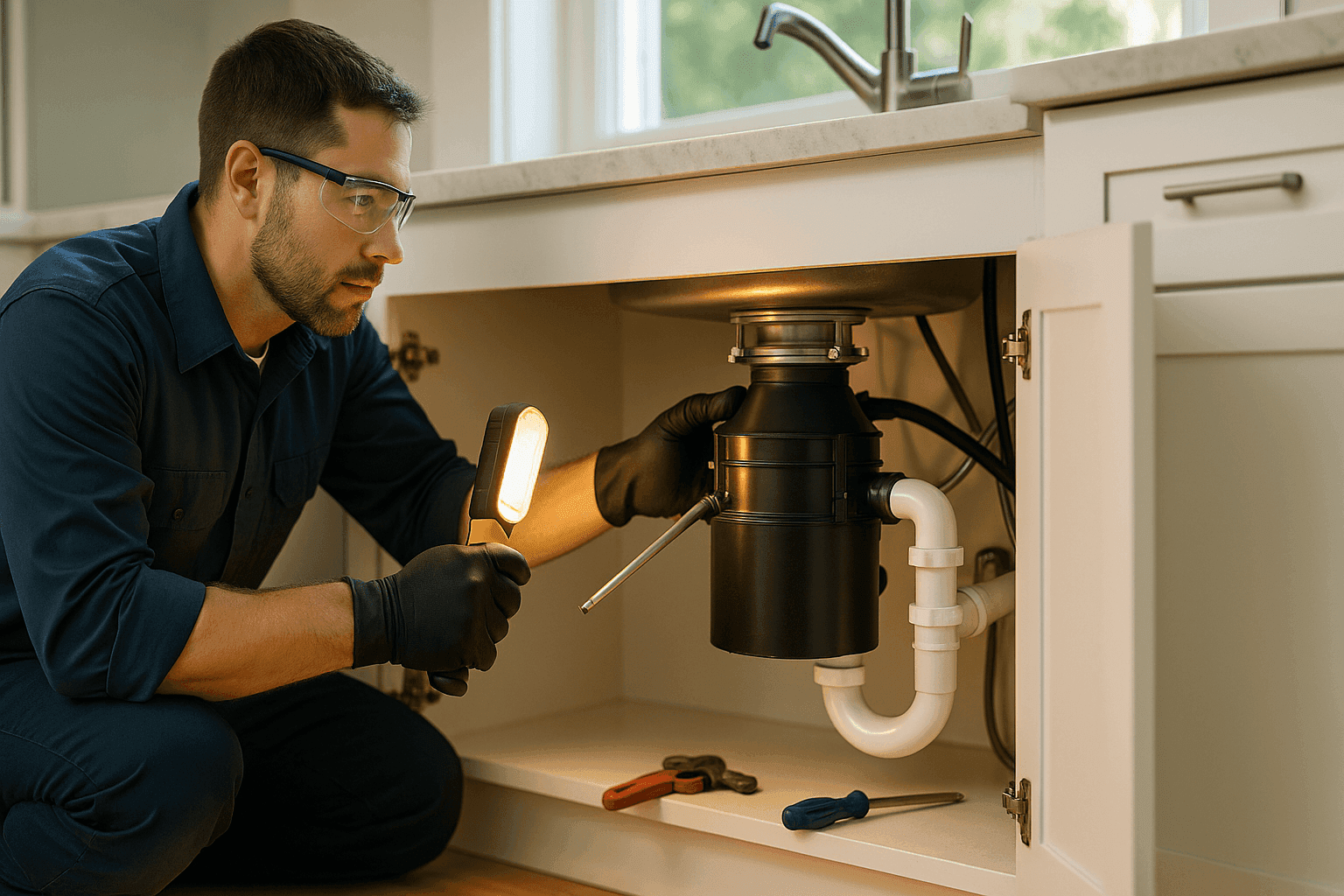
Is your garbage disposal sounding like a freight train—or worse, not making a sound at all? Few things stall a kitchen faster than a jammed or leaking unit. We get it. At Hynes Plumbing, we see it every day. Whether your disposal is humming, grinding, or simply stuck, a quick fix can be the difference between an easy night and a plumbing emergency.
Your time and safety matter. This guide walks you through smart DIY steps, helps you spot when a problem is bigger than a home fix, and shows how our emergency plumbing team restores order—day or night.
Common Garbage Disposal Problems 🛠️
Not every garbage disposal issue is a crisis. Sometimes, it’s a simple clog. Other times, you might face a dead motor or even a slow leak that threatens your cabinets. Here’s what most homeowners run into:
- Unit won’t turn on: No noise, no movement.
- Humming but not spinning: You hear it, but the blades aren’t moving.
- Leaking: Water under the sink or dripping from the unit itself.
- Strange smells: Persistent odors, even after cleaning.
- Slow draining: Water pools in the sink above the disposal.
- Unusual noises: Rattling, grinding, or metallic clunks.
Symptoms & Solutions:
- If you hear a hum but nothing moves, think of a car engine trying to start with a dead battery—power’s there, but something’s stuck.
- A total lack of sound? That’s often an electrical or safety reset issue.
- Persistent water leaks? That’s like a dripping faucet, but hidden—often pointing to worn seals or loose connections.
You don’t have to be a plumbing whiz to spot these issues, but knowing the difference between a nuisance and a red flag saves time—and sometimes, your kitchen floor.
Safety First: What to Avoid ⚠️
Before you reach for that wrench, pause. Garbage disposals can be dangerous if handled wrong. Your safety comes first.
- Never put your hand inside the disposal, even if it’s unplugged.
- Always turn off power at the wall switch and unplug the unit before working.
- Use a flashlight to inspect inside, not your fingers.
- Avoid chemical drain cleaners; they can corrode parts and splash back.
- If you smell gas or see sparks, stop. This moves from a DIY to an emergency plumbing call.
Remember: According to the National Electrical Code (NEC), wet areas like under the sink require ground fault circuit interrupter (GFCI) outlets. If in doubt, don’t risk it.
DIY Repair Steps
Ready to try a fix? Here’s how to tackle the most common garbage disposal issues, step by step.
1. Unit Won’t Turn On
- Check power: Make sure the unit is plugged in and the circuit breaker hasn’t tripped.
- Reset button: Locate the red reset button on the bottom. Press it—if it clicks, you may have solved the problem.
- Test the wall switch: Sometimes, the switch itself fails. Try another appliance in the same outlet.
2. Humming but Not Spinning
- Turn off power: Safety first.
- Use a hex key: Insert into the bottom slot (center of the disposal). Twist back and forth to free the jam.
- Try the reset: Power back on and hit the reset button.
3. Slow Draining
- Check for clogs: Remove the drain trap (the curved pipe) and clear debris.
- Avoid plungers: These can damage seals and push clogs deeper.
4. Strange Smells
- Clean with ice and salt: Run a few ice cubes and a handful of salt to scour the inside.
- Citrus peels: Add a fresh scent, but never overload.
5. Leaks
- Identify source: Is the leak at the top (sink flange), side (dishwasher connection), or bottom (unit itself)?
- Tighten connections: Use pliers to gently snug loose fittings.
- Replace gaskets: If seals are worn, swap them for new ones from a hardware store.
If the problem persists, don’t force it. That’s when emergency plumbing is the safer route.
When to Replace vs. Repair
Sometimes, it’s not worth patching up an old disposal. Here’s how to tell:
Repair Makes Sense If:
- The unit is less than 8 years old.
- Clogs or jams are rare.
- The motor runs quietly after a reset.
- Leaks are from loose connections—not cracks.
Replacement Is Smarter If:
- The unit is over 10 years old (most last 8-12 years).
- Cracks in the housing or persistent leaks.
- Repairs cost more than half the price of a new unit.
- Frequent resets, jams, or electrical issues.
Think of it like an old car—when repairs pile up, a new ride is safer and more reliable.
Professional Help
DIY didn’t work? No shame in that. At Hynes Plumbing, we see every scenario, from simple jams to big emergencies.
What Our Plumbers Do:
- Full inspection: We check wiring, seals, and drain connections.
- Jam removal: Using specialty tools safer than household items.
- Leak detection: Tracing the source to prevent future water damage.
- Electrical safety check: Ensuring circuits comply with code.
- Replacement: If needed, we’ll size and install the right unit for your kitchen.
Real Results: Before & After
Case 1: Jammed by a Spoon
A family called late evening—disposal humming, but no spin. We found a metal spoon wedged inside. After safely extracting it and resetting the unit, their kitchen was up and running in minutes.
Case 2: Persistent Leaks
Another homeowner faced slow leaks, warping the cabinet base. Our inspection found a cracked housing. We replaced the disposal, resealed the flange, and checked all connections. No more drips—and no more musty smells.
Satisfaction, Every Step
With Hynes Plumbing, you’re never left in the lurch. We stand by our work, handle emergencies any time, and put your safety first. Our technicians are trained to follow local building codes and industry safety standards at every visit.
FAQs
How do I know if my garbage disposal is broken or just jammed?
If the unit hums but doesn’t spin, it’s often a jam. No sound at all usually means an electrical issue. Persistent leaks or frequent resets can signal a bigger problem.
Can I use chemical drain cleaners in my disposal?
No. Most chemical cleaners damage internal parts and create splash hazards. Stick to mechanical removal and cleaning methods.
When should I call emergency plumbing for a disposal?
If you smell gas, see sparks, or have water flooding your cabinets, call for help immediately. Also, if you’ve lost power to outlets near water, there may be an electrical hazard.
How long does a typical garbage disposal last?
Most units last 8–12 years with routine use and maintenance.
Local and Seasonal Considerations
In colder months, watch for frozen pipes near your kitchen sink. Freezing can put extra strain on plumbing joints, including those around your disposal. During holidays or family gatherings, avoid overloading your unit—bones, fibrous veggies, and grease are all common culprits for clogs.
If you’re searching for “Water Heater Repair near you” or fast kitchen repairs, keep our number handy. We’re always on call, day or night.
Whatever the fix—big or small—Hynes Plumbing is ready to help. Don’t let a faulty garbage disposal disrupt your home. Call Hynes Plumbing now — or reach us anytime at 888-426-1013 .